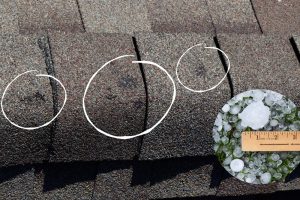
 Hail storms cause approximately $1 billion in damage annually, and no roof is safe. All roof types, including asphalt, metal, tile, slate, and wood, are vulnerable to hail damage. This widespread risk makes it crucial for every homeowner to know what hail damage looks like on a roof. The challenge is that hail damage isn’t always obvious from the ground. Bruised shingles and subtle dents can go unnoticed until they cause serious leaks or structural problems. We’ll walk you through the visible signs of hail damage shingles and other roofing materials in this piece. You’ll learn how to distinguish real damage from normal wear and the critical steps to take once you spot issues.
Signs of Hail Damage You Can See From Ground Level
Before climbing onto your roof, walk around your property. Ground-level indicators often reveal whether what does hail damage look like on a roof requires professional inspection.
Check your gutters for dents and granules
Your gutters serve as the first warning system. You should walk around your house and get into the gutters and downspouts for dents, dings, and dimples in the metal. Hail hits these surfaces at a direct angle and makes impact marks more visible than on shingles. If gutters show damage, your roof almost definitely took the same beating.
You need to check where downspouts drain. Piles of dark, sandy material collecting at the bottom signal trouble. This granule accumulation indicates hail knocked the protective layer off your asphalt shingles and exposed the base fiberglass mat to UV radiation. Some granule loss happens over time. But a sudden large deposit after a storm points to impact damage that requires professional evaluation. You might also spot these granules clogging your gutters, another confirmation of roof strikes.
Look for damage to outdoor items and landscaping
Hail doesn’t target roofs alone. You should inspect your air conditioning unit, mailbox, deck railing, fence posts, and outdoor furniture for dents, dings, or cracks. Window screens tell a clear story. Hail punches small holes or tears in aluminum screens, and if screens are damaged, the hail was large enough to harm hail damage shingles too.
You should walk your yard and look for torn leaves on bushes and shrubs. Broken tree limbs scattered around your property indicate damaging wind or hail. Young garden plants can be crushed by even small hailstones, and large trees might be stripped of foliage. If uncovered outdoor furniture and playsets show dings and dents, your roof endured similar punishment.
Inspect siding and exterior fixtures
You need to get into your siding for broken or dented panels, chipped paint, and cracks. Vinyl siding displays circular holes or chips, and wood siding shows paint damage or actual dents. Stucco and brick, though more durable, can crack or show spalling from large, high-velocity hailstones.
Outdoor light fixtures should be checked for cracks or breaks. Cracked windows, damaged window wraps, or broken garage doors provide additional confirmation. These exterior elements absorb the same impacts as your roof.
Watch for roofing crews in your neighborhood
If you see roofing crews working on multiple houses in your neighborhood, schedule an inspection. Hailstorms move in broad swaths and don’t skip houses randomly. When neighbors get new roofs, your property likely sustained similar damage.
What Hail Damage Shingles and Roof Materials Look Like Up Close
Getting on the roof reveals what ground-level signs only suggest. Understanding what hail damage looks like on a roof requires you to explore specific materials up close.
Bruised and soft spots on asphalt shingles
Hail doesn’t always tear shingles off. More often, it bruises them. Press your finger into a suspected impact zone. A bruised shingle feels soft and spongy, like pressing on a bruised apple. The impact fractures the protective fiberglass mat beneath the surface while leaving the shingle intact. You’ll see dark, circular spots where granules were knocked away and exposed the black asphalt underneath. Pull your finger back and loose granules come with it. These compromised mats deteriorate faster once the waterproof barrier is breached.
Dents and dings on metal roofing
Metal roofs show hail strikes through visible dents and dings. Steel panels resist impacts better but can still dent under large hailstones. Aluminum dents more because it’s softer. Most dents are cosmetic issues that won’t cause roof failure. Punctures are rare but possible with severe storms. Damaged protective coatings accelerate corrosion at impact points.
Splits and cracks in wood roofs
Wood shakes split along the grain when struck. Look for sharp-edged cracks with bright, unoxidized wood showing brown or orange color along the split. Fresh impact marks appear near these splits. A dented or gouged shingle without penetration survived the storm. Only punctures or splits require replacement.
Broken tiles on slate and clay roofs
Hailstones less than 2 inches in diameter don’t damage tile roofs installed the right way. Larger hail creates crescent-shaped fractures at tile edges, star-shaped cracks from impact points, or complete shattering. Slate can puncture and leave clean holes on the impact side with ragged craters underneath.
Damaged roof vents and flashing
Vents, flashing and exhaust caps dent with ease. These soft metal components stick above the roofline and make exposed targets. Dented metal surfaces mean hail damage shingles took similar hits.
Random damage patterns across the roof
Hail creates scattered impacts of varying sizes rather than uniform clusters. This random pattern distinguishes storm damage from other roof problems.
How to Tell Real Hail Damage From Other Roof Problems
Misidentifying roof damage can cost you thousands in denied insurance claims. Learning what does hail damage look like on a roof means distinguishing real impacts from lookalike problems.
Hail bruises vs heat blisters
Hail bruises and heat blisters confuse even experienced homeowners. A hail bruise forms from the outside in. The impact crushes the protective granules and fractures the underlying fiberglass mat. This creates a soft, spongy feel when pressed. These bruises appear at random on the exposed shingle field rather than along edges, since unsupported centers absorb more force.
Blisters form from the inside out. Trapped moisture or heat from poor attic ventilation creates bubbles that pop and leave small, defined pits. Blisters tend to be uniform in size and clustered together. The mat underneath remains firm, not bruised. Young blisters have rigid sidewalls before weathering smooths them out. Hail damage shingles show randomness. Blisters show patterns tied to ventilation problems.
Storm damage vs normal aging
Storm damage happens during a single weather event. Aging develops over 20 years of sun exposure and temperature changes. Storm damage concentrates on the side that took the hit. Aging appears uniform on all slopes. Missing shingles, fresh splits, and new dents alongside soft metal damage indicate acute storm impact. Even granule loss, curling edges, and widespread brittleness signal natural deterioration.
Wind damage vs hail impacts
Wind lifts or tears shingles through upward forces. It starts at roof edges and ridges where adhesive seals break first. Hail strikes downward and leaves circular impact marks anywhere on the roof surface. Wind creates creased shingles and movement patterns. Hail creates dents in metal components and granule loss from hits.
Steps to Take After Discovering Hail Damage
Spotting damage activates a time-sensitive process. Most insurance policies limit claim filing to one year from the date damage occurred. Quick action preserves evidence and protects your coverage.
Get a professional inspection right away
A professional inspection isn’t optional. Trained roofers document the full extent of damage and include compromised flashing, subtle mat fractures, and issues invisible from ground level. Their formal reports provide the credible evidence insurance companies require. You risk missing subtle damage if you handle inspections yourself, which can result in claim denials and expensive out-of-pocket repairs.
Take photos and document everything
The exact storm date and time should be written down. Dented gutters, damaged vents, soft metal components, and granule piles at downspouts need to be photographed. Close-ups with a ruler or coin for scale should be included alongside wide-angle shots showing your whole roof from multiple angles. Your phone’s timestamp feature should be enabled to prove photos were taken shortly after the reported storm. Neighboring properties should be captured if they show similar damage.
File your insurance claim without delay
Your insurance company should be contacted after you document damage. All photos, videos, and professional inspection reports must be submitted. Well-organized documentation streamlines the process and strengthens your position if disputes arise.
Avoid common mistakes during the claims process
Gutters should never be cleaned or damaged components replaced before the adjuster inspects them. You should be present during the adjuster’s visit to point out all affected areas. Original estimates shouldn’t be accepted without comparison to your contractor’s assessment.
Knowing what hail damage looks like on your roof protects your biggest investment. Spotting damage early prevents minor issues from becoming expensive structural problems. You should schedule a professional inspection as soon as you notice any warning signs, whether ground-level indicators or close-up damage. Make sure you document everything really well and file your insurance claim right away. You’ll avoid pricey repairs down the road and maximize your insurance coverage if you act now.
FAQs
Q1. How can I identify hail damage on my roof from the ground? Look for dents in your gutters and downspouts, accumulation of dark granules at downspout drains, damage to outdoor items like air conditioning units and mailboxes, torn window screens, and dents on siding or exterior fixtures. If your neighbors are getting roof repairs after a storm, your property likely sustained similar damage.
Q2. What does hail damage look like on asphalt shingles up close? Hail-damaged asphalt shingles typically have dark, circular spots where granules were knocked away, exposing the black asphalt underneath. When you press on these areas, they feel soft and spongy, like a bruised apple. The impact fractures the protective fiberglass mat beneath the surface, and loose granules often come off when touched.
Q3. How can I tell the difference between hail damage and heat blisters on my roof? Hail bruises form from the outside in, creating random patterns across the shingle with a soft, spongy feel when pressed. Heat blisters form from the inside out due to trapped moisture or poor ventilation, appearing uniform in size and clustered together with firm mats underneath and rigid sidewalls before weathering.
Q4. What should I do immediately after discovering potential hail damage? Get a professional inspection right away, as trained roofers can document the full extent of damage that may not be visible from ground level. Take detailed photos with timestamps showing dented gutters, damaged vents, and granule accumulation. Contact your insurance company promptly, as most policies limit claim filing to one year from the damage date.
Q5. How many hail strikes are needed for insurance companies to approve a claim? Most insurance carriers use a test square method, typically requiring 6 to 10 hail strikes within a 10-foot by 10-foot area of the roof. The exact threshold varies by carrier, and some require not just granule loss but also bruising or actual fracture in the underlying mat to approve coverage.
Crisp Roofing Provides Roof Installation and Repair Services
We install and repair roofing for commercial and residential roofing projects. We are experts at designing and installing roofing systems. A well designed roofing system will help your roof to last longer and prevent leakage in troubled areas of your roof.
> Learn More
Contact us (859-525-7888) for a free quote!
—
 About Crisp Roofing
Crisp Roofing installs and maintains quality residential and commercial roofing systems in Greater Cincinnati and Northern Kentucky. We specialize in Roofing, Gutters, Siding, and more. Since 2003, Crisp Roofing has been committed to the roofing industry, our employees, and our customers and that is the reason we have been able to grow our business every year since we have began. We are certified by the GAF and CertainTeed companies to install and maintain their roofing systems so you can be assured each job will be completed with the the highest standards. Crisp Roofing is an active member of the Northern Kentucky Home Builders Association (HBANKY) and maintains a A+ rating with the Better Business Bureau (BBB).